Saturday, August 31, 2013

Bargaining

Having a conversation with someone preparing to come out to China recently, I was asked about bargaining. ‘Is it true that there is one price for Chinese people and one for foreigners?’ I was asked. In a nutshell – no (with some exceptions – I’ll get to them later). In fact more pointedly I was asked if the cost of food was a variable price that would vary depending on your haggling ability. Again – no.

When buying things like noodles or dumplings from small vendors you will be charged the same price as everyone else – it is written on the wall. In fact that goes for almost all food; in restaurants, street stalls and fast food joints all items will have a set price so you won’t need to worry about getting ripped off. In fact even things such as vegetable markets do not really involve haggling, the price is written on signs (if you can understand it that is), and like anywhere else you will be charged on weight. Larger expenses like hotel bookings, train tickets and flights are also things that have clear prices that are not subject to change. Taxis (licensed ones at least) all use a meter, so again the cost is non-negotiable and directly related to the length of your journey. In fact in general daily life you will probably not come across many situations where the price is variable and dependent on how much you are willing to bargain.

Having said that, there are times when bargaining is a necessary part of getting a reasonable price and these are usually fairly obvious. Small independently-run shops and market stalls are probably the most common arenas where the price told to you is probably not the price you should be paying. As a foreigner it is likely that you will be quoted an initial price higher than a Chinese person may, however if you are a willing haggler then this is no barrier to getting a fair price. My general rule with bargaining is that if I consider it a fair price then I’ll pay, though this does mean that I probably pay a higher price than I should be at times. As someone who is both uncomfortable with and poor at bargaining I am certainly in no position to be giving advice about tactics and tricks, though I thought I would give a few examples of times I have attempted to haggle down a price.

Buying a suit in Shanghai – Myself and a friend decided to go to Shanghai during the National Holiday, buy suits and do a tour of the swankiest bars we could find (we were broke after the first one). I settled on a grey suit from a less than reputable seller. She said it would cost 2500RMB. I said I’d pay no more than 2000RMB. She quickly agreed with a smile on her face. I think I lost that round.

Buying headphones – Needing a new pair of headphones I headed to Guangbutun where there is a mall full of vendors selling all manner of electrical goods. After looking at the items on show at one store and pretending like I had some idea of the quality of the goods I settled on a suitably shiny pair of headphones. The owner wanted 50RMB. I offered 20RMB. The owner maintained that it was 50RMB. I quickly assented and paid the money. Definitely lost that round.

Buying shoes – This one was actually a friend of mine who was searching for shoes to buy from a number of stalls. Finding the only pair that fit him he asked the owner and was told that the price was 400RMB. We made it clear that we only actually had 240RMB on us at that point. With a grumble the owner agreed. We may have won that round.


Tuesday, June 25, 2013

Travelling To Zhangjiajie Part 3

Rising from an uncomfortable night sleeping in a tent, we continued walking down the road. The dwellings soon disappeared and we were mostly surrounded by forest again, with good views of the surrounding pillars. Going off road slightly we hacked our way to the edge of a precipice upon which a large rock was scenically positioned. As a photo opportunity it was pretty impressive, though if I was on my own I would definitely not have done it – the drop was pretty far. Preferring to hide my pant-wetting fear I followed the others out there, staying well clear of the edges the whole time.

Back on the road we soon came upon the coach drop-off point as well as the cable car terminal and were once again surrounded by hordes of tourists. Looking for a little more peace and quiet we walked further down the road, and decided that it might be a good time to descend to the valley floor. Preferring not to use the cable car (or continue on the road) we cut into the forest and started down a fairly steep ravine. The path we were following was little more than a track, and one not used, I suspected, in quite some time. Making our way down in single file I was somewhat worried to see Bobby leap in panic in front of me: finding out that it was a large yellow and black snake did little to soothe my nerves. Times like that make me realise how much I appreciate the lack of dangerous animals in the UK.

Somewhat more hurriedly than before, we finished our descent and got back on the road. Deciding that this time we would actually camp in the woods, rather than in front of someone’s restaurant, we thought it might make more sense to look for a campsite earlier than 8pm. Cutting through a field and over a small river we found a fairly secluded spot and set about clearing a place for the tent. At that point we realised that clearing a campsite is a massive pain in the arse, and took a break to go exploring. Exploring may be too grand a word for it; most of the time was spent laughing at Sean taking a dump behind a large rock and taking pictures with a dead frog – the Discovery Channel it was not.

The benefit of buying such a cheap and low-quality tent was that we were not at all worried about leaving it for a while to stock up on food and drink. Not wanting to saddle ourselves up with copious amounts of beer, we opted to go for a more readily-transportable drink. We ended up purchasing a spirit that I’m pretty sure you could run a car engine on, of which the only thing that could be said in its favour is that it was cheap. With not much else to do, we returned to the campsite and relaxed for the remainder of the evening.
This was the last night of our short trip, with us making the journey back to Wuhan the next day. While it had been somewhat slapdash in its inception, the trip had been pretty much everything I’d wanted. The last thing to be done was have a decent night’s sleep before we were travelling again the next day. Something that sadly was denied to me, Bobby and Sean by the bellowing snores of Rich – to be honest I was more impressed than annoyed.*


*not a feeling shared by Sean. He spent the night kicking and cursing Rich who remained deeply asleep the whole time.


Wednesday, June 19, 2013

KTV - Karaoke

Before I arrived in China I had no idea how popular karaoke is, but more importantly how seriously some people take it. I never realised that by getting up and having a sing song for a laugh with my friends or colleagues I could receive such comments as “You’re not very good at singing” and “I didn’t like that”….it’s fair to say the Chinese can be a little blunt.

My first visit to one of the many KTV’s located around Wuhan was whilst I was at my first school to celebrate Teacher’s day (One of the many arbitrary holidays out here). Our party included me and about 20 Chinese women. I thought…well its karaoke, we’ll probably get a few drinks down us and then all get up and have a go. No such luck, the room was deadly silent as I was handed the microphone and told to choose a song, as their guest it would be rude of me not to sing first. Nobody was talking waiting in anticipation; I rushed through the computer trying to find a song….I settled on Michael Buble – Home, best of a bad bunch. Everyone stared at me as I started to sing…now fortunately for me my dulcet tones won over the crowd before the first chorus and everyone was on their feet applauding. But for you guys out there not quite as talented as me, be worried as they can be a tough crowd. Before I knew it I was rapping Eminem, imitating the rat pack and working the crowd Freddie Mercury style. Some people still talk about that night, but mainly because I got too drunk and was sick in the corner, not really anything to do with the singing.


KTV is extremely popular here amongst all age groups so I’d be surprised if you managed to spend any length of time in China without going a few times. It’s best to not get embarrassed as Chinese people don’t have the same attitude, getting up and singing in front of people doesn’t seem to bother them one bit. KTV can be a great night especially before heading to a bar. Each party gets their own room fully equipped with microphones and a plasma screen to follow the lyrics of your chosen song as well as table service for ordering food and drink, although be careful because the bill can really add up. Some of my best nights out in China have been in a big group of about 20-30 people at KTV, everyone can have a go at singing but it’s not the focal point and has a similar feel to a house party. Although I have been with just 3 or 4 other people before and it’s not quite the same, many Chinese people like going in small groups so they can get more singing time…work on their pitch, needless to say that’s a straight red from me.


Monday, June 17, 2013

Travelling to Zhangjiajie Part 2

Clear-headed and eager to go, we woke up the next morning and made our way to the bus station. There is not much that can be said about the bus station, though we did see a man walking around with his bollocks out – that was weird.

Bus tickets in China are usually pretty cheap, and this was no exception. Tickets to Zhangjiajie were 120RMB, though we were told that it was actually a five and a half hour journey, rather than the four hours we’d expected. Buoyed by this wonderful news we got on the bus in high spirits and having just bought a variety of snacks (most of which were unknown to us) were soon on our way. The national park we were headed for is a vast expanse of huge sandstone pillars, supposedly one of the inspirations behind the floating islands in Avatar. Driving there from Changsha though, the scenery was pretty drab and it was difficult to see where this majestic scenery was supposed to start. As we arrived in Zhangjiajie the terrain had got slightly more mountainous, though still not something you’d put on a postcard.

A three-day ticket for the park is 250RMB with hotels and hostels clustered around the entrance of the park. We had already decided against this option though, and picked up a four man tent in Zhangjiajie before setting off for the park. Within an hour we had managed to get a bus and found ourselves at the entrance of the park. By this point it was starting to look a little more impressive and we soon found ourselves surrounded by high peaks, valleys and lush greenery. The entrance to the park was fairly touristy with concrete paths, drinks vendors and of course; plenty of people. It was already 4pm though, and many people were actually leaving the park and heading back to their accommodation. Taking this as our cue, we headed deeper into the park and set about climbing one of the peaks. There were steps leading the entire way up, though by this point we were no longer coming across many other people. The climb was long and tiring though the views were spectacular.  As we continued to ascend the light began to fade and we began to look for places to set up our tent. The forest was quite thick though, and we decided to hold off until we had reached the top, where we might have better luck finding a clearing. As we drew closer to the peak we seemed to draw upon fresh reserves of energy; the view promised to be superb and who knew what we might find up there? Struggling over the last rise we were finally met by the sight of the summit – as well as a broad well-maintained concrete road and a large hostel. Damn. This intrepid adventure had just got a lot more tame. Apparently for those tourists who eschew climbing to the top it is quite easy to get a taxi to drive you there. That is something I have since heard about other national parks in China; they are very much aimed at tourists who are not keen on actually doing any walking, and as such are criss-crossed with paths, roads and cable cars.


Somewhat disheartened we continued our journey (by the side of the road this time) to find somewhere to camp. We soon came across more buildings and even a restaurant, and decided that this might be a good to settle down for dinner. The restaurant owner was particularly friendly and almost immediately began plying us with Baijiu (Chinese rice wine – I wretch every time I drink it) and beer as we finished our meal. We were pretty much done by this point and asked him if it would be possible to camp out the front of his restaurant. Luckily by this point he was half-cut and soon agreed. In the spirit of cultural exchange and friendliness we unveiled the bottle of rum we had bought with us and got good and drunk with the proprietor. It was hardly Bear Grylls, though considering our lack of equipment, food and preparation it was probably just as well.


Friday, June 7, 2013

Travelling to Zhangjiajie Part 1

The dragon boat festival rolled round and with it a 3-day weekend. This seemed like a good opportunity to get out of the city and travel a little. After minimal research and zero planning we settled upon Zhangjiajie, a national park situated in Hunan province. The journey there would involve a four-hour train journey to Changsha followed by a four-hour coach journey to Zhangjiajie then a further hour from there to the national park itself (Wulingyuan).  Deciding to spend a night in Changsha to break up the journey slightly we left Wuhan in the afternoon on the first step of our journey. Wuhan has three train stations; Wuhan Train Station, Hankou Train Station and Wuchang Train Station. Wuhan Train Station is the newest and is the station along which the Mag-Lev trains run; now going from Guangzhou to Beijing. Changsha is actually on this line and takes two hours, though in a Scrooge-like determination to minimise costs we opted for the slightly less modern and slower train leaving from Wuchang Train Station.

Sticking two fingers up to both convenience and modernity the Chinese rail office has managed to stay impressively backward. Purchasing train tickets can be purchased no sooner than ten days in advance of travel and cannot be done online - around holidays this can lead to large queues at ticket offices and many people will be left without tickets. Getting up early and staking out your place in line is a must. Luckily for us this particular route was not terribly busy nor was it a popular time to travel. To be on the safe side though we bought our tickets a couple of days in advance and on the day, found our way to our train without issue.

Sat in our slightly cramped compartment and basking in our thriftiness we decided to reinvest our saved money on beer. At 4RMB a can, and with a vendor regularly making his way up and down the carriage it was the only sensible idea. Much to the amusement of our fellow passengers we steadily filled our little table with empty cans and before we knew it had arrived in Changsha. Not having booked accommodation, we were reduced to wandering around the vicinity of the train station until we stumbled across a hotel. Luckily there were a couple of hotels close by and after checking one or two out we settled on a hotel that was as cheap as it was seedy. I was sharing a room with Rich whilst Bobby and Sean were in the other room. The rooms were basic though perfectly fine, as well as being (worryingly) equipped with gas masks and breathing apparatus. Actually only Bobby and Sean’s room had gas masks which were pretty serious looking and decked out in space-age silver, not sure who left those there but we preferred not to spend too much time thinking about that.


As mentioned in another blog BBQs are open all night and are a great place for a social dinner – luckily these are not limited to Wuhan, and the four of us soon found ourselves tucking into some night snacks. Probably the highlight was a bird we found roasting on a spit, which was particularly tender and doused in a delicious spicy sauce. What it actually was we were eating was somewhat of a mystery (chicken, pigeon….squirrel?) though when living in China it’s probably not worth overthinking it. Dinner gave us a good opportunity to add to the beers we’d had on the train which, considering that it had mostly consisted of travelling and finding accommodation, completed a fairly satisfactory day.


Monday, June 3, 2013

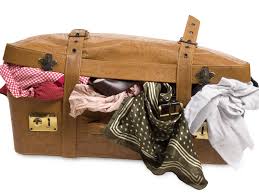
What to pack when you come to China?

I thought it might be helpful to anyone thinking about applying to pass on a few tips about things you might want to bring with you. Firstly shoes, now this applies mainly to the guys because it is quite difficult to buy larger size shoes here, it seems Chinese men have pretty small feet because I’ve been laughed out of shops before when asking for a UK size 11. You’ll do well to find anything larger than a UK size 8 so I suggest you bring with you shoes for all occasions…although larger shoes are available online which you can get delivered (maybe you’ll need a Chinese person to help you for this) Also ASOS do free worldwide delivery to any country as long as you’re willing to wait a couple of weeks.

It can be difficult to pack all the necessary clothes needed to live in Wuhan as you need to pack for all weather possibilities. Wuhan’s stiflingly hot summers and freezing winters means you’re probably want to pack sunglasses, sandals as well as a large winter coat. Waterproofs are also a must as the high humidity summers means thunderstorms occur regularly….I’ve never seen such appalling drainage system with water pooling on pavements every time it rains so waterproof shoes are pretty handy to help you wade through the puddles!

Coffee is very popular in China…Starbucks and Costa’s are everywhere and all supermarkets stock western brands. So you coffee drinkers will be fine however if you’re an English tea person you might want to pack a box of Twinings because you can’t buy it here, unless you want to convert to jasmine or green. Western food and snacks also aren’t stocked here so if there’s something you think you’re going to miss maybe pack some….a nice bar of dairy milk never goes a miss.

Whilst medicine is easy to find….buying the right thing is another story. I bought a little first aid kit from Tesco and it’s been a lifesaver, I also bought plenty of ibuprofen with me…you can only buy a couple of boxes at a time in supermarkets, so start buying early. If you’re going to make a habit of eating street food, you might want to bring imodium too. If you’re into your sport it’s useful to bring a few items with you to stop you buying things again when you’re out here that you already have back home. Tennis or badminton racquets are good to pack if you like a game as you’ll certainly come across some Chinese locals that want to play with you 

Bringing items from home to use in your classes are always received very well by both students and teachers…if you bring anything typical from your home country your students will be very excited. Your students will be very keen to learn about your home country as most Chinese students know very little about other cultures. If you have any old photos of you or pictures of your family to show definitely pack them as you get some good laughs out of them.


The last thing to pack is a bloody big smile! Don’t forget anything.


Tuesday, May 28, 2013

Spice

There are some questions that crop up again and again in China. Most tend to be related to being a foreigner and follow the line of ‘What country are you from?’ ‘Are you used to Chinese food?’ as well as the slightly more probing ‘How much do you earn a month?’. Of course these questions tend to be asked in Chinese so for newcomers a confused look and shake of the head should be quite enough to dispel any interest. There are other questions though that you will very quickly learn the answers to as they tend to be more related to day-to-day observances such as buying food or getting a taxi. At the top of this list must be the three times daily ‘Yao bu yao lajiao?!’ – ‘do you want spice?!’ (this tends to be shouted at you hence the exclamation mark).

Wuhan food is mostly Sichuan cuisine which is characterised by rich spicy flavours and the liberal use of chili, ginger, garlic and the Sichuan pepper. As a result most meals will be at least mildly spicy unless requested otherwise. This extends beyond restaurant dishes though; breakfast noodles can be loaded up with spice, dumplings can be accompanied with a spicy sauce and soup can often be found with large chunks of chili in their depths. Of course for those who are less than keen on corroding their stomach lining this can all be ordered spiceless, and you will always be asked whether or not you want spice – ‘yao bu yao lajiao?!’. Whilst I personally do actually like spicy food, it does not partner up terribly well with a hot summer day. Yet for some reason I always get the impression that it is a test of sorts, and in a (misguided) effort to prove something I plough on with the spice. Whatever this is supposed to achieve is quickly lost by my haggard appearance as I sweatily make my way through my food – most small places do not have air conditioning.


In many ways this is typical of how you learn Chinese, despite teaching for years I still didn’t know the Chinese for most classroom items such as ruler, pencil case or sharpener. Yet ‘Do you want spice?’ ‘Take away or eat in?’ ‘Do you want that as a meal?’ (thanks McDonalds) are phrases that I was a pro at after about 3 weeks. Learning a language when you live in the country is great for that; you learn the things you actually need to get by - spice levels definitely being one of them.